Showing posts with label Cooks River. Show all posts

Friday, May 19, 2017

Cooks River At Botany Bay

So you ride all the way down the Cooks River cycle path. Past Cup and Saucer Creek Wetlands. Past Boat Harbour. Past Gough Whitlam Park and Wetlands. Past Landing Lights Wetlands. And here you are. The Mouth of The Cooks River at Botany Bay. To the north there's Sydney Airport and Port Botany with its bulk petroleum and container terminals. To the south there's the long six kilometre stretch of Lady Robinsons Beach and residential suburbs all the way to The Georges River. You can ride along a cycle path all that way, and stop to swim at any of the seven tidal baths with their shark nets, if you want to. Just around the corner from the mouth is Kyeemagh Baths where I sometimes stop for a dip. You can usually spot a few Bar-Tailed Godwits on the beach here in the season. Otherwise it's gulls and terns, gulls and terns.

Port Botany terminals and Sydney Airport in the distance


No Bar-tailed Godwits today

Wednesday, March 15, 2017

Gough Whitlam Park


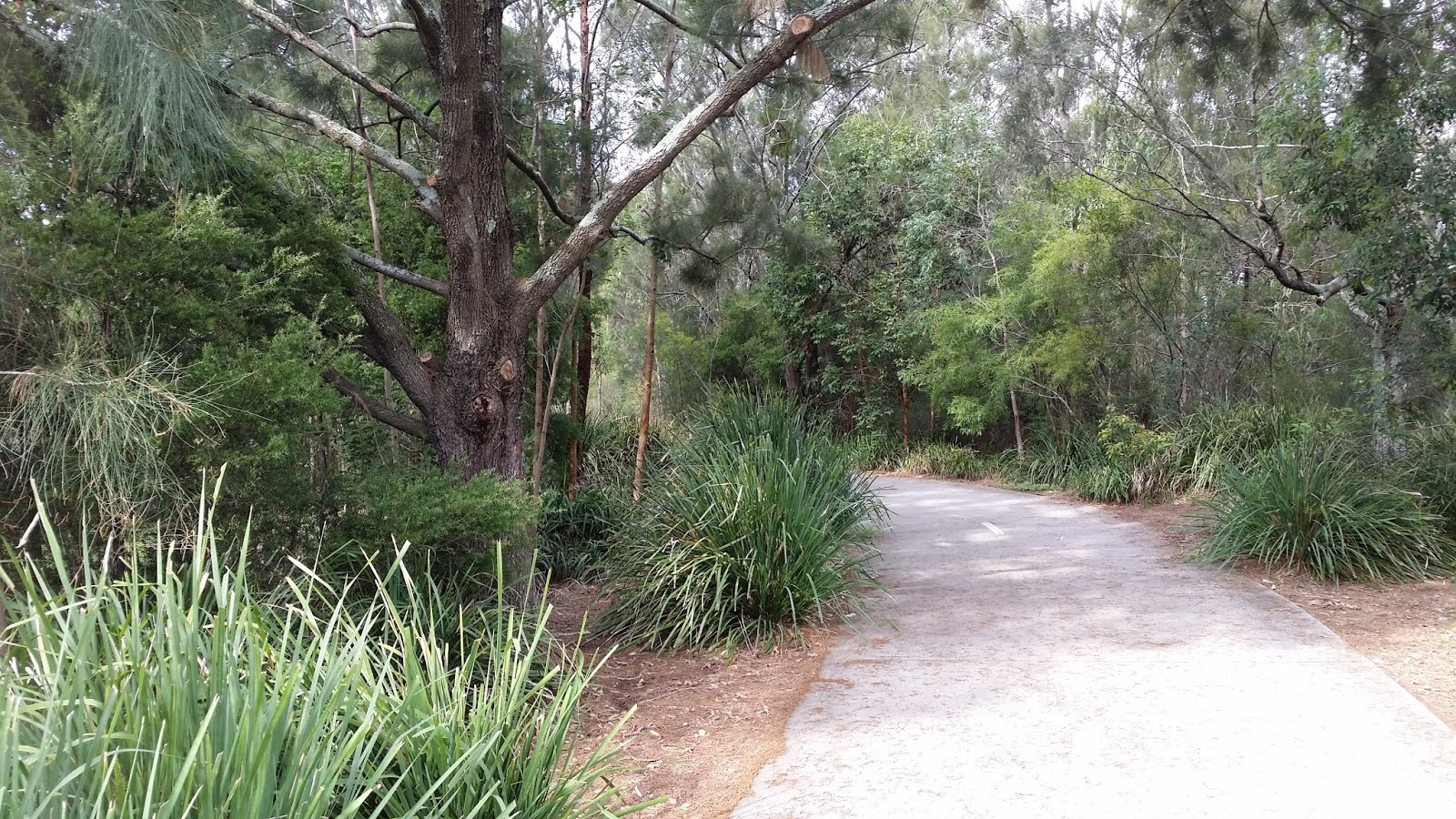
So there's this little patch of restored native riverine forest by a "billabong" along the Cooks River. It's just off the bike path, and close to the kids' playground at Gough Whitlam Park. There's a cafe across a wooden bridge where you can take your KeepCup and get a discount on your coffee. And there's a wooden picnic table and bench where I sit to sip my long black, and where I like to keep my eyes open for birds.

A female Leaden Flycatcher looks nothing like a male. The female has a reddish throat and breast above a white belly and beneath a blue-grey cap. The male however has a completely blue-grey upper body, and a noticeable crest. I saw my first female in this tiny bit of scrub, and had to look it up in the books. An immature male Golden Whistler looks nothing like a mature male. I first saw one here, and had to look that up as well. An immature Spangled Drongo lacks the red eyes and the iridescent spots of the mature bird. Yep, you guessed it.

It's hard to describe just how small the patch I'm talking about really is. Not much bigger than your backyard probably. Though it's close to a long stretch of restored river bank vegetation and to mangroves, I'm still amazed at all the birds I've seen here while I'm sitting relaxing with coffee. It gives me just that little boost of confidence that, if we restore more of the Cooks River environment, biodiversity will increase. And, of course, if that happens, there'll be different birds for me to look up in my old bird books.

Cooks River bike path with the bridge over the tidal inlet to the billabong.

I have seen such a variety of birds in this small patch of restored scrub.

View from my picnic table.


The billabong at low tide. Lots of crabs in the mangroves. Striated Mangrove Herons have nested here.


Sunday, October 23, 2016

Landing Lights Wetlands

I love watching waders. Okay, shorebirds if you must, I understand what you mean, but I'm quaintly old fashioned about what they're called. So I love watching waders. Actually, I love watching waterbirds too. But, ah those waders! They're something special. If truth be told, I'm absolutely hopeless at identifying them, but I could watch them all day.

Although we have plenty of resident waders to get excited about in Australia, there's an extra special buzz about the migratory birds who arrive here each spring and leave us again each autumn. Birds that spend our winter months breeding in China, Mongolia, Siberia, Japan and Alaska. It's just astounding to think about the distances these birds fly twice a year. So it's incredibly sad to know that many migratory wader species are experiencing long term decline. For example, the Eastern Curlew and the Curlew Sandpiper are now on the critically endangered list. Habitat loss seems to be the crucial factor, with the most pressing concerns being the huge losses of tidal flats along the seaboards of the Yellow Sea. Best not to be complacent about Australia though. Here wetlands have historically been bulldozed for developments such as marinas, resorts and even rubbish dumps. It's been estimated that, in New South Wales, 60% of all wetlands have been destroyed or degraded in the last 200 years (http://www.environment.nsw.gov.au/wetlands/ThreatsToWetlands.htm). Sydney, as Australia's largest city, has seen enormous impacts on its wetlands. Even where wetlands remain, there are issues of modification, pollution and exotic species invasion.

I will breath a slight sigh of relief and report that some wetlands remain and are being restored, while others are being created. Along The Cooks River, Cup and Saucer Creek Wetland is an example of the latter, while Landing Lights Wetland is an example of the former. Landing Lights? Well, I can't swear to it, but it's probably named after the low-flying aircraft coming in to Sydney International Airport, which is about a kilometre away across The Cooks River. An alternative name is The Riverine Park Wetlands. Rockdale council has described the site as containing some of the last remaining saline wetlands in the area, and as being potential habitat for both migratory and resident Australian waders (https://www.rockdale.nsw.gov.au/environment/Pages/Environment_LLProject.aspx).

Landing Lights Wetlands

Some days I've seen lots of waders and waterbirds here. Dozens of Black-winged Stilts and Australian White Ibises. Plenty of White-faced Herons, Royal Spoonbills, Chestnut Teal, Grey Teal and Pacific Black Ducks.  I keep missing the visiting Curlew Sandpipers, Sharp-tailed Sandpipers and Bar-tailed Godwits (though I often see the latter not far downstream at the mouth of The Cooks River on Kyeemagh Beach). On the day I took the photos, there were no birds in the water at all, but there were ten or more Superb Fairy Wrens flitting around the scrub around the pools.

Guide to some of the birds seen (and not seen, at least by me) at the wetlands

It's really sad to read then, that this small wetland is now under threat from developers (http://savestgeorge.org.au/bartonpark/).


Saturday, October 1, 2016

Alexandria Canal bank rehabilitation

Another Sydney water project along The Cooks River, is the restoration of the banks along the Alexandria Canal. Formerly a tributary of the Cooks (Sheas Creek), the canal has been described as one of the most polluted waterways in the southern hemisphere. The project has stabilised the degraded stone walls of the canal, by replacing sandstone but also constructing 'block pools' cut into and between the sandstone blocks, thereby creating habitat for intertidal plants and animals. One of the restored sections is at Tempe Reserve, where I join others for a monthly bird survey. The Reserve is, itself, a restoration project, whereby a former rubbish tip was turned into sports fields, native plant gardens, a saltmarsh and restored bushland.

Section of the Alexandria Canal Bank restoration (note the block pools) 
(you may also notice the Silver Gull looking for picnics to raid)

Some information about the project and its effect on the biodiversity of the canal


Wednesday, June 15, 2016

Boat Harbour, Cooks River

Where are the boats? Long gone now. This small harbour was built for the Sea Scouts' use in the 1960s, but quickly silted up and was abandoned. When I first started biking up and down the Cooks River Cycleway, you'd see plenty of fishers on the harbour arms, eagerly awaiting their toxic catch. Waterbirds would congregate on those arms too, but move off quickly as the fishing folk arrived. The displaced waterbirds would settle on the floating litter boom, which quickly became crowded. Then somebody in Canterbury Council had a very good idea. Fence off one of the arms to create a Waterbird Sanctuary. Great for the birds, but what about the fishing fraternity? Well, those fishers with a death wish could still reel in their polluted tiddlers from the other arm. And that's exactly what happened. The sanctuary went ahead. Result? A great spot for counting waterbirds. Some on the boom, some on the fenced off harbour arm, and, at low tide, some patrolling the mudflats.

Great Egret on the harbour arm

Start counting. Not just thirty-three Little Black Cormorants (think Beggars Banquet) this time, but plenty of Australian Pelicans, Great Cormorants, Pied Cormorants, Little Pied Cormorants, White-faced Herons, Great Egrets, Little Egrets, Masked Lapwings, Dusky Moorhens, Eurasian Coots, Purple Swamphens, Pacific Black Ducks, Chestnut Teal and more.

Australian Pelican and Great Cormorant on the litter boom

Australian White Ibis just beyond the fence boundary of the Water Bird Sanctuary

White-faced Heron and Magpielark on the Water Bird Sanctuary fence

Masked Lapwings inside the Sanctuary

Little Pied Cormorant


Litter boom holding back as much of the plastic tide as it can


Wednesday, May 4, 2016

Better Times Ahead?

Steady on there. It's not all doom and gloom along the poor polluted waterway that is The Cooks River (though the sacks of plastic litter we gather on clean up days can be disheartening). There are plenty of remediation projects happening. Everything from raingardens in local streets to full scale restoration of native riparian vegetation along the river banks. Local councils, volunteer groups and even Sydney Water have taken responsibility for a variety of projects; each of which has the aim of restoring the river to something approaching its former health.

The Cooks River catchment encompasses some of the most densely populated urban areas in Australia. Stormwater run off, from paved surfaces in the catchment, pollutes the river with chemicals and rubbish from the streets. In an attempt to prevent the worst of this, local councils have installed litter booms to catch the plastic bottles, plastic bags, polystyrene, takeaway cups and containers, and other pieces of rubbish washed into the river through drains. Volunteer groups such as the Mudcrabs spend many weekends during the year fishing yet more rubbish out of the water, and collecting plastic trapped in the mangroves. Councils are also building raingardens to slow the stormwater down and filter out oil, chemicals, sediments and even dog excrement from the roads, pavements and driveways before it reaches the river.


Litter boom on The Cooks River


The Cooks River is twenty-three kilometres long, and is fed by several smaller creeks. In the upper reaches, the river and these creeks are little more than concrete culverts and stormwater channels. These channels were constructed almost eighty years ago on what was then the understanding that they would help to prevent flooding. In the last decade, the concrete walls have degraded to the point where they need replacement, and Sydney Water, in cooperation with the relevant council and local communities, has begun to replace the concrete with sandstone and native plants to naturalise the river banks.

On this side of the bridge, The Cooks River is little more than a stormwater channel

On this side of the bridge, the river banks are being naturalised

The naturalised banks should help in the struggle to restore the rivers health, should promote biodiversity, and should actually be more effective in preventing flooding.


A naturalised section

Transition between a naturalised section and the 1940s concrete walls

Sydney Water have also installed educative signs in passive recreation spots, to help the local community to understand the rationale behind, and the process undertaken for, bank naturalisation.

Interpretive sign at the site of one of the naturalisation projects


Tuesday, May 3, 2016

My Patch

Not exactly a pristine waterway: The Cooks River at Tempe


And in its upper reaches, little more than a stormwater ditch


My local birding patch? Well, that's up and down The Cooks River. Well worth a look for all sorts of birds. Don't bother to pack your swimsuit though. Nobody swims in this river. Not anymore. Although early last century they did. You can even find old photographs of lifesavers patrolling the riverbanks. Since then, industrial waste, including heavy metals, has accumulated in the river bed, and sewerage overflow pipes have often contaminated the water with faecal coliforms. Add to that the tons of rubbish, especially plastics, that are washed into the river through stormwater drains. So you don't want to take a dip here. Not even a quick one. Some people panic if they get so much as a splash from the water. But birdos are made of stronger stuff than that, and we regularly get into the mud between the mangroves to gawp at a Striated Heron or a Royal Spoonbill.

I shake my head when I see people fishing along the river though.

Just eat the chips

Monday, May 2, 2016

Why Counting Cormorants?

Why Counting Cormorants?

Because I'm a birdo, aren't I? And that's what we do, don't we? We count those feathered things. Especially the ones we haven't seen on our patch before. Most especially the ones we've never seen anywhere before. Then we get excited. Very excited.

I'd seen Little Black Cormorants before. I'd seen them up and down The Cooks River before. But a Cormorant conga line on a rubbish boom? I hadn't seen that before. So I got excited. And then I counted them. And there were thirty-three. Easy to remember. It's the speed of an LP record (forget the third). So I could walk back home thinking Closer or Before And After Science or The Stone Roses or.......
Easy. See?
Think: Beard Of Stars

One Egret. One Ibis. Still counting.


Sunday, May 1, 2016

International Dawn Chorus Day

It's the First of May. It's May Day. It's International Dawn Chorus Day. Around the world people are broadcasting the sounds of daybreak from overnight soundcamps. They are setting up their microphones, and streaming birdsong and more as the light comes. These events are linked through Reveil, a 24 hour series of live events, organised from Soundtent (http://www.soundtent.org/).

I'm ready to broadcast too. I'm streaming the sounds of daybreak from Tempe Ponds using the Mixlr app (above) on my smartphone. It's not so much a sound tent I've got, more of a sound anorak, as I hold my waterproof over my phone. Apart from the sound of the falling rain, it's so quiet around the ponds that you can easily hear the hum of early traffic on the Princes Highway. Not the sounds I'd intended to share with the rest of the world. Slowly I begin to hear the wok wok of Striped Marsh Frogs against the rumble of an approaching thunderstorm. Surely a bird or two will pipe up soon. You can always bet on the Noisy Miners to make a racket in the mornings. 

Well, you'd lose your bet. Distant traffic, frogs, raindrops, thunder, sirens. And now a petulant grumble, rising to a roar of fury. It's a plane taking off from the nearby international airport. At last, I can hear the occasional startled protest of a Dusky Moorhen. Now back to the cars and buses away over there somewhere. What I wouldn't give to hear (and stream) the carolling of even one lonely Australian Magpie. I'd settle for a Red Wattlebird clearing its throat. What do I get? Another aircraft taking off.

At least there are no barking dogs as yet. Wait! Was that a Superb Fairy-wren? Gone. There - a Eurasian Coot. Stopped. The light is coming quickly now. It's a grey day, but I watch the rain on the ponds anyway. An Australasian Grebe is standing on a piece of polystyrene in the middle of a pond, like a castaway on a floating island or a surfer on a stand-up paddleboard. I'm twenty minutes into the broadcast. Not a lot going on audio wise. 

It's now forty-five minutes since I began. I'm sure the whole wide world has heard enough by now to realise that there is not likely to be much of a dawn chorus from Tempe Ponds today. The sun is well and truly up, though there's little evidence of that through the heavy black clouds. Time to stop the broadcast. And wander home forlorn in the soaking rain. 

Of course. Here come the Rainbow Lorikeets, screaming their way through the canopy of the gum trees beyond the ponds. And one lone Pied Currawong arrives in time to mock me.